A hydraulic breaker, also known as a hydraulic hammer or hydraulic rock breaker, is a core attachment for excavators. Leveraging the powerful synergy of hydraulic pressure and nitrogen gas, it can efficiently break hard materials such as rock and concrete, and is widely used in various construction projects.
Its core features include high-frequency impact, strong adaptability, and powerful performance. It enables rapid obstacle removal, is compatible with excavators of different tonnages, and balances high efficiency with practicality.
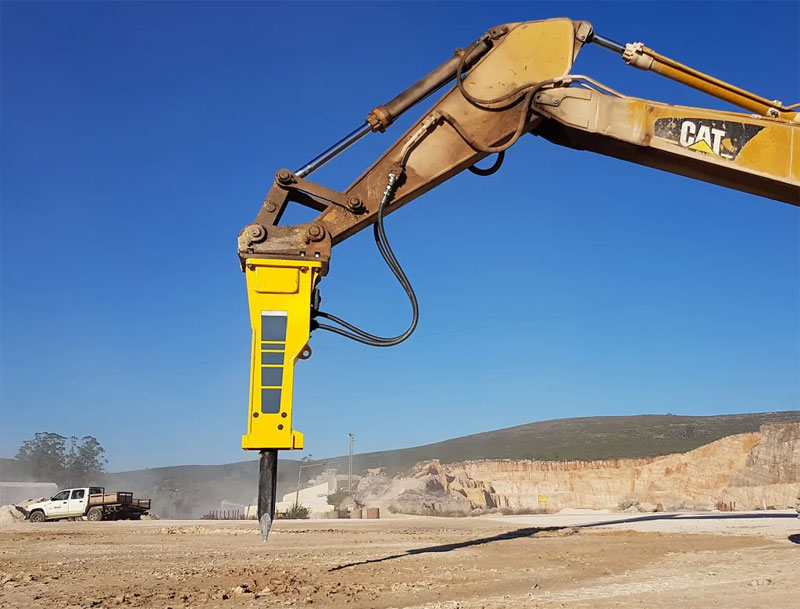
I. Core Features
1. Powerful Performance: Powered by the synergistic force of hydraulic pressure and nitrogen gas, it delivers high impact frequency and strong striking force, enabling rapid breaking of hard materials.
2. Wide Compatibility: It can be flexibly connected to excavators and loaders, with models of different tonnages suitable for various scenarios such as mining, municipal construction, and demolition.
3. Precision Engineering: Composed of core components including the upper cylinder (nitrogen chamber), middle cylinder (hydraulic cylinder), lower cylinder (front body), and chisel, each part functions independently to ensure stable operation.
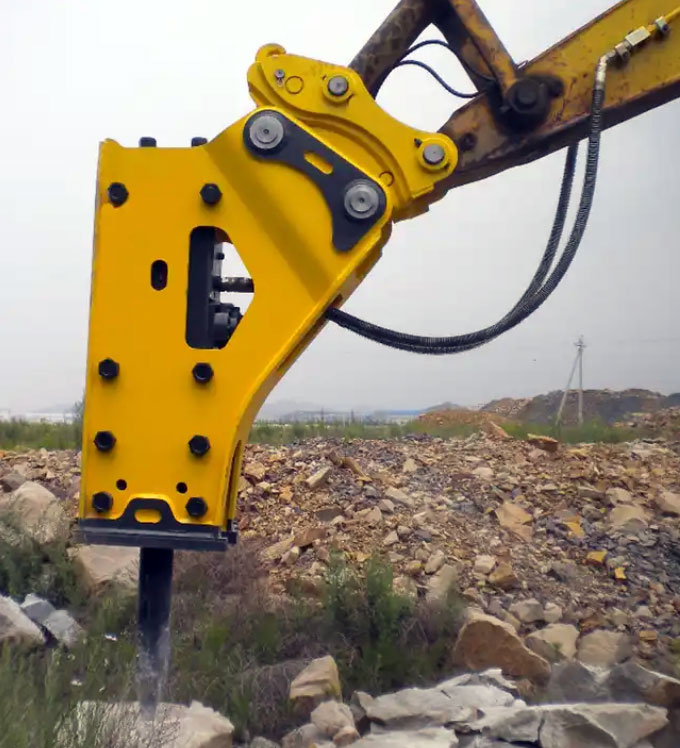
II. Advantages of Using Hydraulic Breakers
Advantages:
1. High Breaking Efficiency: Its high-frequency impact can quickly crush hard materials such as rock and concrete, significantly saving construction time. Compared with manual breaking, the efficiency is increased by dozens of times.
2. Strong Compatibility: It can be matched with various construction machinery such as excavators and backhoe loaders, with easy installation. It can meet the operation requirements of multiple scenarios including mining, municipal construction and emergency response.
3. Flexible Operation: It allows precise control of the striking position and force, avoiding damage to surrounding non-breaking areas, making it especially suitable for urban refined construction.
4. Replaces Traditional Blasting: It eliminates the need for explosives, offering higher safety. It also reduces dust and noise pollution generated by blasting, better meeting environmental protection requirements.
Disadvantages:
1. High Energy Consumption: It requires substantial consumption of hydraulic oil and fuel during operation, leading to significantly high long-term operational costs.
2. Stringent Maintenance Requirements: Core components (such as the chisel, piston, and sealing rings) are prone to wear. Failure to perform timely maintenance may result in malfunctions like weak striking force and oil leakage, thereby affecting construction progress.
3. Substantial Noise Pollution: Even with silent models, a certain level of noise is generated. Long-term operation may have an adverse impact on the hearing of operators.
4. Tonnage Limitations: Small-sized hydraulic breakers are unable to handle ultra-large hard rock blocks, while large-sized ones have high requirements for the tonnage of supporting construction machinery, resulting in limited flexibility.
ZhongSheng Machinery (ZHSTECH) manufactures robust excavator attachments, providing high-performance Hydraulic Breakers, Rippers, and Pulverizers for demanding demolition and construction work.With a commitment to quality and innovation, ZHSTECH ensures reliable performance and long-lasting durability for every attachment.