The hydraulic breaker is a critical attachment for excavators.ZhongSheng Machinery (ZHSHTECH) manufactures robust excavator attachments, providing high-performance Hydraulic Breakers, Rippers, and Pulverizers for demanding demolition and construction work.
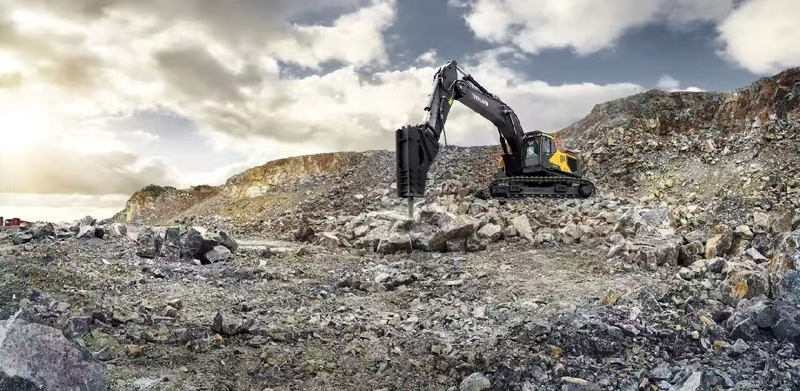
Proper maintenance and reasonable operation can effectively extend its service life, improve working efficiency, and reduce operating costs. This document summarizes operation standards, maintenance tips, grease selection, and common troubleshooting methods to help users operate the equipment safely and efficiently.
1. Daily Maintenance & Correct Operation
Regular Inspection:Check key components such as the hydraulic system, air circuit, lubrication system, and dust-proof device for looseness, wear, cracks, or leakage. Repair or replace damaged parts in time to ensure stable performance.
Lubrication Maintenance:Add lubricating oil regularly and quantitatively as per the manufacturer’s requirements. Clean impurities and dirt in the lubrication circuit to ensure smooth lubrication and reduce internal wear.
Proper Working Mode:Select the corresponding mode (breaking, drilling, etc.) according to job requirements. Avoid incorrect operation and overuse to prevent premature damage.
Control Working Parameters:Adjust impact force, frequency, and continuous working time reasonably based on material hardness and working conditions. Overloading and high-intensity continuous operation are strictly prohibited.
Avoid Overload Operation:Do not force impact or overload the machine. This reduces damage to critical components such as the cylinder, piston, and chisel, and extends the service life.
Timely Cleaning:Clean dust and impurities on the surface and inside the breaker after operation to prevent blockage and corrosion. Store the breaker in a dry, clean environment to avoid moisture and rust.
Regular Comprehensive Maintenance:Perform full maintenance at scheduled intervals: replace wearing parts, tighten bolts, clean the lubrication system. Follow the model-specific manual for detailed cycles and procedures.
2. Proper Grease Selection
Choose grease based on working environment, temperature, load, and manufacturer recommendations:
· High-temperature environment (smelting, high-temperature sites): Use high-temperature resistant grease for stable lubrication.
· Humid / water environment (water conservancy, rivers, offshore projects): Use waterproof and anti-corrosive grease.
· High-load operation (quarrying, mining, hard rock breaking): Use high-load special grease for impact and wear resistance.
· High-speed operation (highway construction, municipal works): Use high-speed grease for better fluidity and wear resistance.
Selection tips: Follow the manufacturer’s model; confirm applicable temperature range; use certified quality products. Replace grease and clean the lubrication system regularly.
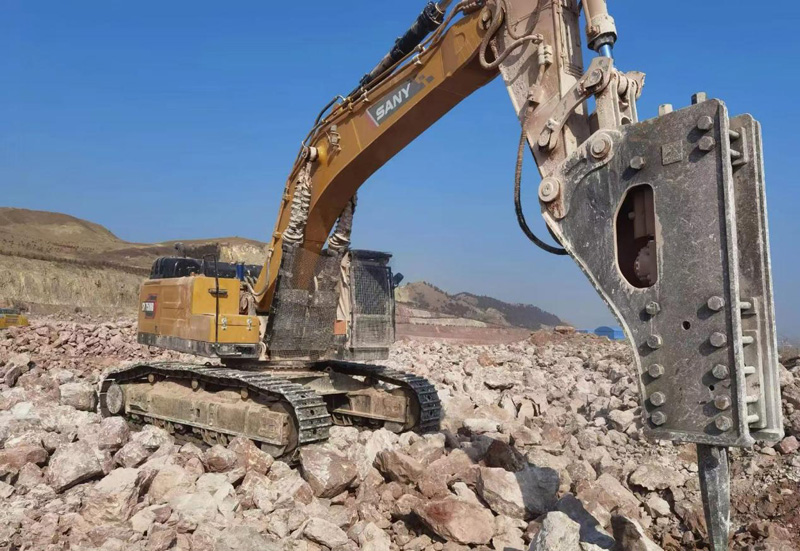
3. Common Faults & Solutions
3.1 Insufficient Impact Power
Possible causes:Insufficient nitrogen pressure, low hydraulic oil pressure, insufficient hydraulic oil volume, mismatched chisel size, excessive wear of guard plates/bushings, loose bolts, partially closed shut-off valve, loose lock nut on relief valve, ambient temperature, or rock hardness.
Solutions:Check nitrogen pressure, static oil pressure, and hydraulic oil volume; inspect chisel, guard plates, and bushings for wear and tightness; fully open the shut-off valve and tighten the relief valve lock nut.
3.2 Oil Leakage
Possible causes:Mainly due to worn, damaged, or improperly installed seals, or loose bolts. Common leakage locations:
· Piston area
· Joint between nitrogen chamber and middle cylinder (worn O-ring)
· Joint between valve base and middle cylinder (damaged O-ring)
· Oil pipe connection on middle cylinder
· Joint between upper and middle cylinder (worn seals, O-rings, backup rings, or loose housing bolts)
Solutions:Replace worn or aged O-rings, seals, and backup rings; tighten all connecting bolts and pipe joints to the specified torque to ensure proper sealing.