Zhongsheng Machinery (ZHSHTECH) produces heavy-duty excavator attachments—including high-performance Hydraulic Breakers, Rippers, and Pulverizers—tailored for tough demolition, mine tunneling, and construction tasks, compatible with 6–30 ton excavators. This guide covers core nitrogen charging, working principles, selection, and maintenance to maximize breaker lifespan and efficiency.
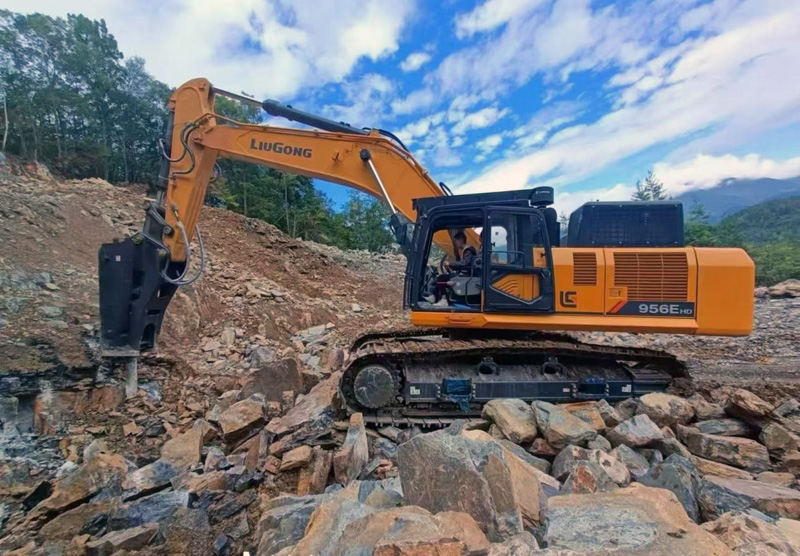
1. Nitrogen Charging for Hydraulic Breakers
1.1 When to Recharge
Recharge if you notice obvious drops in impact force (e.g., slower concrete demolition), weak striking (the chisel fails to penetrate hard materials), or nitrogen leakage (visible oil/nitrogen seepage at the charging port). Nitrogen is critical for energy storage/release in each strike cycle, so insufficient pressure directly reduces working efficiency.
1.2 Optimal Pressure
Most models require 13–16 bar (14–14.5 bar is recommended): small breakers (for 6–10 ton excavators) use 13–14 bar, while medium ones (15–25 ton excavators) adopt 14–15 bar. Adjust based on the manufacturer’s manual—never rely on experience alone.
1.3 Step-by-Step Process
1.Tools: Prepare a nitrogen cylinder (pure nitrogen only), pressure gauge (calibrated), 17/19/24/27 mm wrenches, and a screwdriver.
2.Clean & Prep: Blow dust off the charging port with an air gun; remove the protective cap and inspect the O-ring (replace if cracked to avoid leakage).
3.Check Pressure: Attach the gauge to measure residual pressure; release excess gas slowly if over the target.
4.Charge: Connect the cylinder hose, open the valve gradually (to prevent sudden pressure spikes damaging the accumulator) until reaching the target.
5.Seal: Close the cylinder, disconnect the hose, and reinstall the cap tightly.
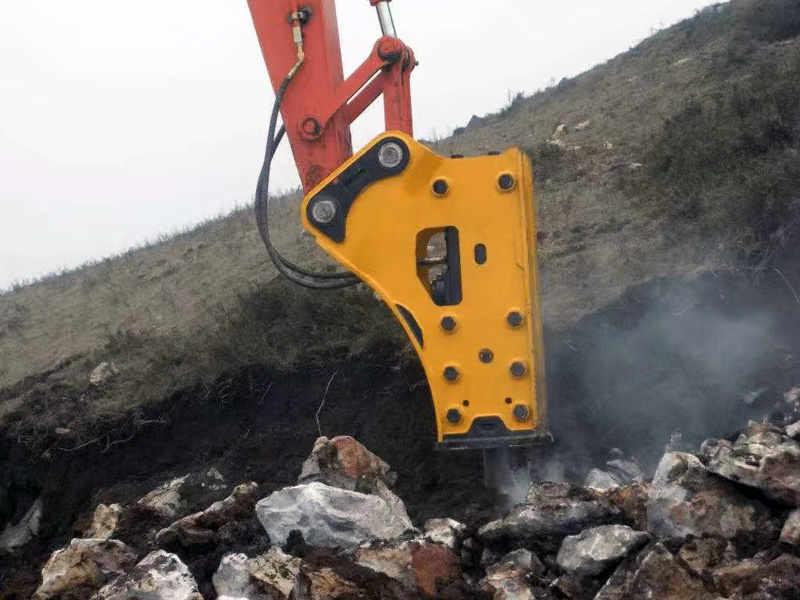
2. Working Principle & Selection
2.1 Core Principle
It converts hydraulic energy to mechanical impact via a piston-nitrogen cycle: hydraulic oil pushes the piston upward to compress the nitrogen chamber; when pressure peaks, nitrogen releases energy instantly, driving the piston to strike the chisel at 500–800 times per minute for continuous high-frequency impacts.
2.2 Selection Rule
Weight ratio: Match the breaker weight to 1/10–1/15 of the excavator’s weight (e.g., a 12-ton excavator fits a 1–1.5 ton breaker).
Hydraulic match: Align the breaker’s pressure/flow (e.g., 80–120 L/min for 12-ton excavators) with the excavator’s system to avoid pump damage.
3. Usage & Maintenance
3.1 Operation Rules ("5 Do’s & 5 Don’ts")
Do’s: Keep the chisel perpendicular (to avoid side wear); pre-loosen hard materials with light point strikes; limit continuous operation to 15-minute intervals (prevent overheating); strike from edges (reduce chisel load); lubricate the chisel every 2–3 hours (use specialized grease).
Don’ts: Avoid hanging impact/prying (damages the housing); don’t strike one spot over 15s (causes material hardening); don’t move the excavator with the chisel on the ground (wears the tip); don’t strike hard steel (exceeds chisel hardness, leading to cracking).
3.2 Routine Checks
Inspect the chisel daily (replace if wear exceeds 10mm or cracks appear).
Replace anti-wear hydraulic oil (ISO VG46) every 500 working hours.
Check nitrogen pressure monthly; recharge with pure nitrogen (impure gas causes corrosion).